Becoming a Follower of The Lord: My Conversion from Mormonism to Christianity

Becoming a Follower of The Lord: 
My Conversion from Mormonism to Christianity


If you're Christian or Mormon, then most likely you're familiar with the story of Saul of Tarsus.  We can read the story of Saul's conversion (who later becomes Paul the Apostle) in Acts 9:1-31.  To summarize, in case you aren't familiar with the story, Saul was a Roman citizen and a Jew.  He was part of political party and self-appointed leaders known as the Pharisees.  When speaking about the Pharisees, Jesus said, "obey everything they teach you, but don't do as they do" (Matthew 23:2-5; 7-10 (Contemporary English Version).
Resurrected Jesus appears to Saul on the road to Damascus

Saul was dedicated to the persecution of early Christians and was responsible for the deaths of many Christians.  While on the road to Damascus, the resurrected Jesus appeared to Saul in a great light.  Saul was struck blind and regained his sight 3 days later.  This event in Saul's live was the impetus for Saul to begin preaching that Jesus of Nazareth is the Jewish Messiah and the Son of God.  He also changed his name to Paul.

During the life of Christ, many people knew that Christ was the Messiah and the Son of God but they were too afraid what the Pharisees would do to them and were too afraid that they would lose the praise of others - "the leaders liked praise from others more than they liked praise from God" (John 12:42-43 (Contemporary English Version).

I'm aware of a celebrity who hosts a popular radio talk show who has commented more than once that Christianity appeals to him but he hasn't had a "Saul on the road to Damascus moment".  This blog post is about how I personally knew the truth but hadn't had a "Saul on the road to Damascus moment" and was too afraid of what my Mormon friends and family would do to me if I were to leave Mormonism for Christianity.

In 2010, we were living in Eagle Mountain, Utah.  My daughter was friends with a Born-Again Christian girl named Jane (not her real name).  Jane's mother Melanie (not her real name) had invited us to her church in Saratoga Springs, Utah.  I made arrangements to leave work and went to church with my family and Melanie's family for about 30 minutes before I had to return to work.  I thought to myself how much I just wanted to leave the Mormon church and join Melanie's church.  I wasn't entirely sure why, but I was starting to have some doubts about Mormonism even then and wanted to follow Christ.  Yet, I was still too afraid to broach the subject with my wife.  I was too afraid that she would be afraid of me leaving Mormonism and would kick me out.  I was also afraid what our Mormon neighbors would think, so I kept it to myself.

In 2010 I still didn't have an understanding of grace either.  I still thought grace was something that was earned.  I thought forgiveness was something that was conditional and that the atonement of Christ only applied if I was putting for full effort.  So, even though I didn't trust Mormonism, I didn't have a grasp on the Christian concept of grace versus the Mormon concept of grace.  (See Ephesians 2:8-9)

In the Summer of 2012 my family was now living in St. George, Utah.  I had a major crisis where I decided either that I was going to "outer darkness" (the Mormon version of Hell) or that God simply did not exist at all.  I won't go into all the details here, but suffice to say July 23, 2012 was one of the worst days in my life and the life of my family.  The events of this particular day gave me great cause to consider how a parent would treat a child in need of forgiveness.  I made a decision that a loving parent would never require a child to earn forgiveness.  A loving parent would not limit forgiveness to one opportunity but unlimited opportunities.  As a Mormon, I was never taught that Christians believed in unconditional forgiveness and unlimited grace.  So, as Bono once said, "I still haven't found what I'm looking for."

Between August 2012 and January 2013 I started reading the Contemporary English Version (CEV) of the New Testament and would discuss what I was reading with two Christian friends in my workplace.  At some point, my Christian friend asked me if I believed what  I was reading in the Bible.  I did.  My Christian friend asked me why I was still Mormon.  I didn't have a good answer.  I did have an excuse though - I'm afraid to go to a different church, I'm comfortable where I am.  I also realized that it was dishonest to pretend to believe something I didn't.  My friend helped point me to a local non-denominational Christian church that specialized in Mormons coming out of Mormonism and transitioning to Christianity.

On January 27, 2013, I attended the non-denominational Christian church.  The Pastor invited us to fill out cards if we wanted more information about the church.  I filled out a card and also e-mailed the Pastor.  He contacted me and we made arrangements to talk by phone the next day.  On January 28, 2013 I spoke to the Pastor.  I don't remember everything we discussed, but I told him my feelings on forgiveness.  I told him that I felt that God was a loving parent and that a loving parent would never place conditions on forgiveness other than the child's admission that he/she did something wrong and was contrite.  The Pastor told me "that's what we believe too".  I don't know if I was just really naive but I never knew Christians believed this way.  I felt like Mormonism had hidden that from me and had lied about what Christians believed on many levels.  Something I often told people as a Mormon missionary, "If you want to know about Mormons, why would you ask our enemies about us and not us?"  Well, I guess the same could be said about Christianity.  Not to imply that Mormons are enemies of Christianity, but I'm simply asking, why was I asking Mormons what Christianity believed instead of asking Christians?

The asked me if I had a desire to follow Christ and enter into a relationship with Christ.  I told him I did.  The Pastor invited me to say a prayer that night.  I don't remember everything I prayed, but I do remember that I made a distinction between the biblical Jesus and the Mormon Jesus and told God that I wanted to have a relationship with the Biblical Jesus if that was the true Jesus and that I would disavow the Mormon Jesus if there was a difference.  I also desired a forgiveness of my sins (they were really making me depressed).

The next morning, I woke up and thought about the prayer.  Almost as soon as I thought about the prayer, I felt a peace come over me.  I told the Pastor about this and he said, "Don't trust that feeling, back it up with the Bible."  I told a Christian what the Pastor said and she said, "The Pastor doesn't want to use your feelings to manipulate you into becoming a Christian, he wants you to find the answers in the Bible."

So, I wouldn't say that I had a "Saul on the road to Damascus moment", but something did happen.  I knew right then that I was going to announce that I was leaving Mormonism.  A month later, I sent a resignation letter.  I was afraid of losing family, friends, and welfare assistance from the LDS church.  I was more afraid of offending God by choosing to remain Mormon.  I felt a peace.  I felt that God would be there for me as long as I put my faith in him.  Without being specific, I have seen enough evidence of this to further believe that God has been there and will continue to remain there.  In fact, even if I lose faith in God, He'll still remain there. (John 6:36-39) 

27 My sheep know my voice, and I know them. They follow me, 28 and I give them eternal life, so that they will never be lost. No one can snatch them out of my hand. 29 My Father gave them to me, and he is greater than all others.[a] No one can snatch them from his hands,  
(John 10:27-29)

32 You will know the truth, and the truth will set you free.” 
(John 8:32)


Is The Gift of The Holy Ghost Exclusive to Mormonism?

I really enjoyed Bible study yesterday. We discussed Mark 8.  There's a passage in this chapter where Christ heals a blind man.  Christ has to do it twice.  The first time, the man says he sees men and they look like trees.  Someone in the study group wondered if Christ had to heal him twice because the man was blind from birth and didn't understand what he was seeing, so Christ had to heal his mind in order for the man to fully comprehend what he was seeing.

I got to thinking about how I read the New Testament for the first time when I was twenty years old and how I didn't really understand it.  I read it again at age 42 and then I had a new and different understanding; one that eventually lead me to change the who way I viewed Christ.

I told the group about how I had given up on God and decided that if my life was going to be an eternity of hell (because I kept sinning and believed that recommission of a sin negated previous forgiveness).  I told God that I forsook him and I lost my will to live.  Two weeks after I had made that decision, the voice of a Christian began to open my mind and my heart to a new understanding of God's mercy and grace.  It eventually lead me to the understanding that God's forgiveness is eternal and a new believe that "once forgiven, always forgiven".  Six months after I had decided to given up on God, I met a pastor who asked me if I wanted to accept Christ into my life.  I told him I did.  I prayed and asked Christ to come into my life and the next day I was born-again.  I knew I was saved.

I'm not entirely certain how we go to that point in the discussion.  I remember we were talking about the scripture where Christ tells Peter that he knows what he knew (about the divinity of Christ) because God had revealed it to him.  We discussed how the Roman Catholic church interprets this scripture to mean that God had given authority to Peter to take over once he was gone.  I explained that the Mormon church interprets this scripture to mean that God has founded his church on the "rock of revelation" or a prophet and this is their claim to a line of authority that goes directly to Christ.

I asked if I could offer my personal interpretation of the scripture, the group facilitator allowed me.  I said that when I received my personal witness of Christ, the answer I received was that it was not important to belong to a church (in this sense I mean church as a denomination, not as belonging to the body of Christ) but important to have a relationship with Christ and belong to Christ.  The facilitator said that he believed too that this is what Christ was telling Peter; that we all must receive a personal witness of the divinity of Christ, from the Holy Ghost, to know that Christ is God.

I don't claim to have received a revelation from God or the Holy Ghost.  I'm learning from my Christian friends that we cannot trust our feelings, that we must back our feelings with scripture.  Yes, I got a feeling, which I believe is the Holy Ghost, that Christ is God.  I got a feeling that I now have a personal relationship (something I never had before) with Jesus Christ (who is God).

I am not a better person now that I have accepted Christ.  I recognize my fallen nature.  I recognize that I am a sinner who is saved by grace.  I have done some really stupid things since I've become a Christian; things of which I'm not proud.  My old understanding would have taught me that I was sinful because I did not have the Holy Ghost.  My old understanding would have told me that the crises and trials I've brought upon myself, due to poor choices, were from a lack of the Holy Ghost.  My new understanding teaches me that God allows these things to occur because they are things I need to overcome (I'm referring to my bad temper and anger issues).  My new understanding gives me a recognition that these are things that God can help me overcome and things that will, ultimately, give me strength and the ability to help others who find themselves in the same position.

This will come across as an indictment of Mormons.  I write it not out of anger or hatred toward Mormons.  I write it out of love, in hopes that someone else might have Christ heal them a second time, so that they can understand what they're seeing.  Since becoming born-again, I have felt, what Mormons would describe as, the Holy Ghost more often than I ever did as a Mormon.  I frequently feel that burning in my bosom that I can only describe as the love of God.  I feel it now, as I write this.  I was taught, as a Mormon, that this feeling would leave me if I ever left the Mormon church.  On the contrary, I feel it more frequently and in stronger intensity than I ever did as a Mormon.

The church of Christ is all the followers of Christ combined (in all the various denominations), it's not one single denomination.  God had revealed to Peter the divinity of Christ.  If we all pray for a personal witness of that divinity, we too can receive it and have a personal relationship with Jesus Christ, if that's what we desire.  The Holy Ghost will bear witness of Christ in our hearts and our minds.  Biblical scripture will back all these evidences that the Holy Ghost witnesses to us.

Mormon Lies Exposed

One of the recent arguments used in favor of Mormonism and against traditional Christianity is that in Mormonism, everyone gets a degree of glory or "heaven" depending on how they acted in this mortal life.  One of the basic tenets of Mormonism is that if something was said by a Prophet or Apostle, that whatever they said takes precedence over anything said by anyone else on the matter:

President Ezra Taft Benson (1899–1994) taught that we should value the words of the prophet more than those of any other person: “Of all mortal men, we should keep our eyes most firmly fixed on the captain, the prophet, seer, and revelator, and president of The Church of Jesus Christ of Latter-day Saints. This is the man who stands closest to the fountain of living waters. There are some heavenly instructions for us that we can only receive through the prophet. A good way to measure your standing with the Lord is to see how you feel about, and act upon, the inspired words of his earthly representative, the prophet-president. The inspired words of the president are not to be trifled with. All men are entitled to inspiration, and various men are entitled to revelation for their particular assignment. But only one man stands as the Lord’s spokesman to the Church and the world, and he is the president of the Church. The words of all other men should be weighed against his inspired words” (“Jesus Christ—Gifts and Expectations,” New Era, May 1975, 16).
 And the next quote is taken from a 2010 student manual:
 Speaking under the direction of the Holy Ghost, the living prophet’s words take precedence over other statements on the same issue. His inspired counsel is in harmony with the eternal truths in the standard works and is focused upon the needs and conditions of his day.(Teachings of the Living Prophets Student Manual, (2010), 14–27)
So, what have the Prophets and Apostles said regarding those who have left the church; apostates?

Brigham Young:
 “I say, rather than that apostates should flourish here, I will unsheath [sic] my bowie knife, and conquer or die [Great commotion in the congregation, and a simultaneous burst of feeling, assenting to the declaration.]. Now, you nasty apostates, clear out, or judgment will be put to the line, and righteousness to the plummet [Voices, generally, ‘go it, go it.’]. If you say it is right, raise your hands [All hands up.]. Let us call upon the Lord to assist us in this, and every good work.”
- Prophet Brigham Young, Journal of Discourses, v. 1, p. 83; online at http://journals.mormonfundamentalism.org/Vol_01/refJDvol1-16.html 
 Orson Hyde:
“I would have a tendency to place terror on those who leave these parts [Utah], that may prove their salvation when they see the heads of thieves taken off, or shot down before the public.... I believe it to be pleasing in the sight of heaven to sanctify ourselves and put these things away from our midst.”
- Apostle Orson Hyde, Journal of Discourses, v. 1, p. 73; online at http://journals.mormonfundamentalism.org/Vol_01/refJDvol1-13.html 
Boyd K. Packer

“Remember: when you see the bitter apostate, you do not see only an absence of light, you see also the presence of darkness. Do not spread disease germs.”
- Apostle Boyd K. Packer, “The Mantle is Far, Far Greater Than the Intellect,” speech given August 1981 at BYU, Brigham Young University Studies, Summer 1981; available online as a PDF file BYU Studies Volume 21:3 or as a web page at http://www.mormonismi.net/kirjoitukset/bkp_mantteli.shtml 

“Save for those few who defect to perdition after having known a fulness [sic], there is no habit, no addiction, no rebellion, no transgression, no offense exempted from the promise of complete forgiveness.”
- Apostle Boyd K. Packer, “The Brilliant Morning of Forgiveness,” speech available on-line at https://www.lds.org/general-conference/1995/10/the-brilliant-morning-of-forgiveness

A member of the "so called" church posted the above depiction of "The Plan of Salvation" on his Facebook page.  There are a couple of things I notice right off the bat in this depiction  I notice that getting into the Celestial Kingdom is 100% works based and I notice that Outer Darkness (The Mormon equivalent of Hell) is reserved for people like me, who were LDS faithful who fell away.

So, do I really get a degree of glory?  So, does Mormonism really give me a promise of eternal glory at the end of this life, even if I fell short?  Nope, Mormonism is now promising me that I'll be cast out into Outer Darkness.

I'd like to share a few scriptures from the Bible for you to ponder:

Romans 10:9 KJV  That if thou shalt confess with thy mouth the Lord Jesus, and shalt believe in thine heart that God hath raised him from the dead, thou shalt be saved.
 Ephesians 2:8-9 KJV  For by grace are ye saved through faith; and that not of yourselves: it is the gift of God:  9.  Not of works, lest any man should boast.

John 10:28-29 KJV  And I give unto them eternal life; and they shall never perish, neither shall any man pluck them out of my hand.  29.  My Father, which gave them me, is greater than all; and no man is able to pluck them out of my Father's hand.
To me, Romans 10:9 is saying that by confession of my mouth and believing in my heart that God raised Jesus Christ from the dead, I will be saved.  Ephesians 2:8-9 is saying that it's our faith combined with God's grace that saves us, not our works, because works would provoke us to boast.  Lastly, John 10:28-29 promises that once saved always saved.  There is no way that one can lose his or her salvation once saved.  Mormonism has told me that I can expect to be cast into Outer Darkness and that I've lost my salvation.  Which of these two systems gives you greater hope?


Letter to a CES (Church Educational System) Director

I've read Jeremy Runnels letter once.  I don't feel that his intent was to do harm but to get questions answered.  I don't feel that his questions were adequately answered, but he did receive a reply from FAIR (Mormon apologists), to which he replied.  I think this is a good read.  I know a lot of Mormons have been told not to read "anti" Mormon stuff.  I think the label "anti" is painted with a broad brush.  Like most "anti" literature I've read, it's not an attack on the LDS faith.  It's legitimate questions to which the person feels he or she is not getting adequate answers.  Here's a link to the letter as well as supporting documentation:

Letter to a CES Director


Here are some good questions about the Book of Mormon which Jeremy Runnels asks:


Book of Mormon Concerns & Questions:
1. What are 1769 King James Version edition errors doing in the Book of Mormon? An
ancient text? Errors which are unique to the 1769 edition that Joseph Smith owned?
2. When King James translators were translating the KJV Bible between 1604 and 1611, they
would occasionally put in their own words into the text to make the English more
readable. We know exactly what these words are because they're italicized in the KJV
Bible. What are these 17th century italicized words doing in the Book of Mormon? Word
for word? What does this say about the Book of Mormon being an ancient record?

Examples:

The above example, 2 Nephi 19:1, dated in the Book of Mormon to be around 550 BC,
quotes nearly verbatim from the 1611 AD translation of Isaiah 9:1 KJV – including the
translators’ italicized words. Additionally, Joseph qualified the sea as the Red Sea. The
problem with this is that (a) Christ quoted Isaiah in Matt. 4:14-15 and did not mention the
Red Sea, (b) “Red” sea is not found in any source manuscripts, and (c) the Red Sea is 250
miles away.
 7

In the above example, the KJV translators added 7 italicized words not found in the source
Hebrew manuscripts to its English translation. Why does the Book of Mormon, completed
1,200 years prior, contain the exact identical seven italicized words of 17th
 century
translators?
3. The Book of Mormon includes mistranslated biblical passages that were later changed in
Joseph Smith’s translation of the Bible. These Book of Mormon verses should match the
inspired JST version instead of the KJV version that Joseph later fixed. A typical example of
the differences between the KJV, the BOM, and the JST:

3 Nephi 13:25-27:
25: …Therefore I say unto you, take no thought for your life, what ye shall eat, or what ye
 shall drink; nor yet for your body, what ye shall put on. Is not the life more than meat,
 and the body than raiment?
26: Behold the fowls of the air, for they sow not, neither do they reap nor gather into barns;
 yet your heavenly Father feedeth them. Are ye not much better than they?
27: Which of you by taking thought can add one cubit unto his stature?

Matthew 6:25-27 (from the King James Version Bible – not the JST):
25: Therefore I say unto you, Take no thought for your life, what ye shall eat, or what ye
 shall drink; nor yet for your body, what ye shall put on. Is not the life more than meat,
 and the body than raiment?
26: Behold the fowls of the air: for they sow not, neither do they reap, nor gather into
 barns; yet your heavenly Father feedeth them. Are ye not much better than they?
27: Which of you by taking thought can add one cubit unto his stature?

The above passages are identical, which is understandable as Christ may have said the
same thing to both groups of people in the Old world as well as the New world. Let’s look
at the JST version of the above identical passages:

Joseph Smith Translation of the same passages in the LDS Bible for Matthew 6:25-27:
25: And, again, I say unto you, Go ye into the world, and care not for the world: for the
 world will hate you, and will persecute you, and will turn you out of their synagogues.
26: Nevertheless, ye shall go forth from house to house, teaching the people; and I will go
 before you.
27: And your heavenly Father will provide for you, whatsoever things ye need for food,
 what ye shall eat; and for raiment, what ye shall wear or put on.
Joseph Smith corrected the Bible. In doing so, he also corrected the same identical passage
in the Book of Mormon. The Book of Mormon is “the most correct book” and was translated
a mere decade before the JST. The Book of Mormon was not corrupted over time and did
not need correcting. How is it that the Book of Mormon still has the incorrect passage and
does not match the JST in the first place? 8

4. DNA analysis has concluded that Native American Indians do not originate from the Middle
East or from Israelites but rather from Asia. Why did the Church change the following
section of the introduction page in the 2006 edition Book of Mormon shortly after the DNA
results were released?
“…the Lamanites, and they are the principal ancestors of the American Indians”
to
“…the Lamanites, and they are among the ancestors of the American Indians”
5. Anachronisms: Horses, cattle, oxen, sheep, swine, goats, elephants, wheels, chariots,
wheat, silk, steel, and iron did not exist in pre-Columbian America during Book of Mormon
times. Why are these things mentioned in the Book of Mormon as being made available in
the Americas between 2200 BC - 421 AD?
6. Archaeology: There is absolutely no archaeological evidence to directly support the Book of
Mormon or the Nephites/Lamanites who numbered in the millions. This is one of the
reasons why unofficial apologists are coming up with the Limited Geography Model (it
happened in Central or South America) and that the real Hill Cumorah is not in Palmyra,
New York but is elsewhere and possibly somewhere down there instead. This is in direct
contradiction to what Joseph Smith and other prophets have taught. Never mind that the
Church has a visitor’s center there in New York and holds annual Hill Cumorah pageants.

We read about two major war battles that took place at the Hill Cumorah (Ramah to the
Jaredites) that numbered in the deaths of at least 2,000,000 people. No bones, hair,
chariots, swords, armor, or any other evidence found whatsoever.

Compare this to the Roman occupation of Britain and other countries. There are abundant
evidences of their presence during the first 400 years AD such as villas, mosaic floors,
public baths, armor, weapons, writings, art, pottery and so on. Even the major road systems
used today in some of these occupied countries were built by the Romans. Additionally,
there is ample evidence of the Mayan and Aztec civilizations as well as a civilization in
current day Texas that dates back 15,000 years. Where are the Nephite or Lamanite
buildings, roads, armors, swords, pottery, art, etc.?

Latter-day Saint Thomas Stuart Ferguson was BYU’s archaeology division (New World
Archaeological Funding) founder. NWAF was financed by the Church. NWAF and
Ferguson were tasked by BYU and the Church in the 1950s and 1960s to find
archaeological evidence to support the Book of Mormon. This is what Ferguson wrote after
17 years of trying to dig up evidence for the Book of Mormon:
“…you can’t set Book of Mormon geography down anywhere – because it is
fictional and will never meet the requirements of the dirt-archaeology. I should
say – what is in the ground will never conform to what is in the book.”
– Letter dated February 2, 1976 9

7. Book of Mormon Geography: Many Book of Mormon names and places are strikingly
similar to many local names and places of the region Joseph Smith lived.

The following two maps show Book of Mormon geography compared to Joseph Smith's
geography:

Book of Mormon Geography


Joseph Smith’s Geography
(Northeast United States & Southeast Canada)

The first map is the "proposed map," constructed from internal comparisons in the Book of
Mormon. 10

Throughout the Book of Mormon we read of such features as "The Narrow Neck of Land"
which was a day and a half's journey (roughly 30 miles) separating two great seas. We
read much of the Hill Onidah and the Hill Ramah – all place names in the land of Joseph
Smith's youth.

We read in the Book of Mormon of the Land of Desolation named for a warrior named
Teancum who helped General Moroni fight in the Land of Desolation. In Smith's era, an
Indian Chief named Tecumseh fought and died near the narrow neck of land helping the
British in the War of 1812. Today, the city Tecumseh (near the narrow neck of land) is
named after him.

We see the Book of Mormon city Kishkumen located near an area named, on modern
maps, as Kiskiminetas. There are more than a dozen Book of Mormon names that are the
same as or nearly the same as modern geographical locations.

Actual Place Names

Book of Mormon Place Names
Alma
Antrim
Antioch
Boaz
Hellam
Jacobsburg
Jerusalem
Jordan
Kishkiminetas
Lehigh
Mantua
Moraviantown
Noah Lakes
Oneida
Oneida Castle
Rama
Ripple Lake
Sodom
Shiloh
Sherbrooke
Alma, Valley of
Antum
Ani-Anti
Boaz
Helam
Jacobugath
Jerusalem
Jordan
Kishkumen
Lehi
Manti
Morianton
Noah, Land of
Onidah
Onidah, Hill
Ramah
Ripliancum, Waters of
Sidom
Shilom
Shurr
Source: Book of Mormon Authorship: A Closer Look, Vernal Holley
Why are there so many names similar to Book of Mormon names in the region where Joseph
Smith lived? This is all just a coincidence?

 11

Hill Cumorah:
Off the eastern coast of Mozambique in Africa is an island country called “Comoros.” Prior
to its French occupation in 1841, the islands were known by its Arabic name, “Camora.”
There is an 1808 map of Africa that refers to the islands as “Camora.”

Camora is near center in the above 1808 Map of Africa
The largest city and capital of Comoros (formerly “Camora”)? Moroni. “Camora” and
settlement “Moroni” were common names in pirate and treasure hunting stories involving
Captain William Kidd (a pirate and treasure hunter) which many 19th
 century New
Englanders – especially treasure hunters – were familiar with.
In fact, the uniform spelling for Hill Cumorah in the 1830 edition of the Book of Mormon is
spelled as “Camorah.”

Pomeroy Tucker was born in Palmyra, New York in 1802, three years before Joseph Smith.
He is considered to be a contemporary source. This is what he said about Joseph Smith:
"Joseph ... had learned to read comprehensively ... [reading] works of fiction and
records of criminality, such for instance as would be classed with the 'dime novels'
of the present day. The stories of Stephen Buroughs and Captain Kidd, and the
like, presented the highest charms for his expanding mental perceptions."
– Mormonism: Its Origin, Rise, and Progress, p.17
Some apologists say that Tucker’s Mormonism: Its Origin, Rise, and Progress is anti-Mormon
and thus anything in the book cannot be trusted. The problem with this premise is that LDS
scholar and Church history compiler B.H. Roberts quoted Tucker for background information
on Joseph and FairMormon has an article where they quoted Tucker 4 times from his book
as support for Joseph and even referred to Tucker as an “eye witness” to Joseph and his
family. Is Tucker’s peripheral information only useful and accurate when it shows Joseph and
the Church in a positive and favorable light?
"We are sorry to observe, even in this enlightened age, so prevalent a disposition
to credit the accounts of the marvellous. Even the frightful stories of money being
hid under the surface of the earth, and enchanted by the Devil or Robert Kidd 12

(Captain Kidd), are received by many of our respectable fellow citizens as truths."
– Wayne Sentinel, Palmyra, New York, February 16, 1825
Notice that this is considered “prevalent” and “received by many of our respectable fellow
citizens as truths.” The above contemporary 1825 Palmyra, New York newspaper quote
was not tainted by any desire to damage Joseph Smith. This article provides a snapshot of
the worldview of 1825 New England.
Hill Cumorah and Moroni have absolutely nothing to do with Camora and Moroni from
Captain Kidd stories? Stories that Joseph and his treasure hunting family and buddies were
familiar with? The original 1830 Book of Mormon uniform “Camorah” spelling? This is all
just a mere coincidence?
8. There was a book published in 1825 Vermont entitled View of the Hebrews. View of the
Hebrews compared to the Book of Mormon:
 View of the Hebrews
Online Source
Book of Mormon
Online Source
Published 1823, first edition
1825, second edition
1830, first edition
Location Vermont
Poultney, Rutland County

Note: Oliver Cowdery, one of the
Book of Mormon witnesses, lived in
Poultney when “View of the Hebrews”
was published.
Vermont
Sharon, Windsor County

Note: Windsor County is adjacent
to Rutland County.
The destruction of Jerusalem √ √
The scattering of Israel √ √
The restoration of the Ten Tribes √ √
Hebrews leave the Old World for
the New World
√ √
Religion a motivating factor √ √
Migrations a long journey √ √
Encounter "seas" of "many waters" √ √
The Americas an uninhabited land √ √
Settlers journey northward √ √ 13

Encounter a valley of a great river √ √
A unity of race (Hebrew) settle the
land and are the ancestral origin of
American Indians
√ √
Hebrew the origin of Indian
language
√ √
Egyptian hieroglyphics √ √
Lost Indian records √

A set of "yellow leaves" buried in
Indian hill. Elder B.H. Roberts noted
the "leaves" may be gold.
√

Joseph Smith claimed the gold plates
were buried in Hill Cumorah.
Breastplate, Urim & Thummim √ √
A man standing on a wall warning
the people saying, “Wo, wo to this
city…to this people” while
subsequently being attacked.
√

Jesus, son of Ananus, stood on the
wall saying “Wo, wo to this city, this
temple, and this people.”

- Came to preach for many days
- Went upon a wall
- Cried with a loud voice
- Preached of destruction of Jerusalem
- Had stones cast at him

Source: View of Hebrews, p.20
√

Samuel the Lamanite stood on the
wall saying “Wo, wo to this city” or
“this people”.

- Came to preach for many days
- Went upon a wall
- Cried with a loud voice
- Preached of destruction of Nephites
- Had stones cast at him

Source: Helaman 13-16
Prophets, spiritually gifted men
transmit generational records
√ √
The Gospel preached in the
Americas
√ √
Quotes whole chapters of Isaiah √ √
Good and bad are a necessary
opposition
√ √
Pride denounced √ √
Polygamy denounced √ √
Sacred towers and high places √ √ 14

Messiah visits the Americas √

Quetzalcoatl, the white bearded
"Mexican Messiah"
√
Idolatry and human sacrifice √ √
Hebrews divide into two classes,
civilized and barbarous
√ √
Civilized thrive in art, written
language, metallurgy, navigation
√ √
Government changes from monarchy
to republic
√ √
Civil and ecclesiastical power is
united in the same person
√ √
Long wars break out between the
civilized and barbarous
√ √
Extensive military fortifications,
observations, "watch towers"
√ √
Barbarous exterminate the civilized √ √
Discusses the United States √ √
Ethan/Ether Elder B.H. Roberts noted: "Ethan is
prominently connected with the
recording of the matter in the one
case, and Ether in the other."

Source: B.H. Roberts, Studies of the Book of Mormon, p.240-242,324-344
Reverend Ethan Smith was the author of View of the Hebrews. Ethan Smith was a pastor in
Poultney, Vermont when he wrote and published the book. Oliver Cowdery – also a Poultney,
Vermont resident – was a member of Ethan’s congregation during this time and before he went
to New York to join his cousin Joseph Smith. As you know, Oliver Cowdery played an
instrumental role in bringing forth the Book of Mormon.
LDS General Authority and scholar Elder B.H. Roberts privately researched the link between the
Book of Mormon, the View of the Hebrews, Joseph’s father having the same dream in 1811 as
Lehi’s dream, etc. that were available to Joseph Smith, Oliver Cowdery, Martin Harris and others
before the publication of the Book of Mormon. Elder Roberts’ private research was meant only
for the eyes of the First Presidency and the Quorum of the Twelve and was never intended to be 15

available to the public. Roberts’ work was later published in 1985 as Studies of the Book of
Mormon. At the conclusion of his research, Elder B.H. Roberts came to the following conclusion:

9. The Late War Between the United States and Great Britain: This was an 1819 textbook
written in King James Version style language for New York state school children, one of them
very likely being Joseph Smith. The first chapter alone is stunning as it reads incredibly like
the Book of Mormon:
1. Now it came to pass, in the one thousand eight hundred and twelfth year of the
christian era, and in the thirty and sixth year after the people of the provinces of
Columbia had declared themselves a free and independent nation;
2. That in the sixth month of the same year, on the first day of the month, the chief
Governor, whom the people had chosen to rule over the land of Columbia;
3. Even James, whose sir-name was Madison, delivered a written paper to the
Great Sannhedrim of the people, who were assembled together.
4. And the name of the city where the people were gathered together was called
after the name of the chief captain of the land of Columbia, whose fame
extendeth to the uttermost parts of the earth; albeit, he had slept with his fathers…
Along with the above KJV language style presence throughout the book, what are the
following Book of Mormon phrases, verbatim, themes, and storylines doing in a children’s
school textbook that was used in Joseph Smith’s own time and backyard? A mere decade
before the publication of the Book of Mormon?
 Devices of “curious workmanship” in relation to boats and weapons.
 A “stripling” soldier “with his weapon of war in his hand.”
 “A certain chief captain…was given in trust a band of more than two thousand
chosen men, to go forth to battle” and who “all gave their services freely for the good
of their country.”
 Fortifications: “the people began to fortify themselves and entrench the high Places
round about the city.”
 Objects made “partly of brass and partly of iron, and were cunningly contrived with
curious works, like unto a clock; and as it were a large ball.”
 “Their polished steels of fine workmanship.”
 “Nevertheless, it was so that the freeman came to the defence of the city, built strong
holds and forts and raised up fortifications in abundance.” 16

 Three Indian Prophets.
 “Rod of iron.”
 War between the wicked and righteous.
 Maintaining the standard of liberty with righteousness.
 Righteous Indians vs. savage Indians.
 False Indian prophets.
 Conversion of Indians.
 Bands of robbers/pirates marauding the righteous protagonists.
 Brass plates.
 “And it came to pass, that a great multitude flocked to the banners of the great
Sanhedrim” compared to Alma 62:5: “And it came to pass that thousands did flock
unto his standard, and did take up their swords in defense of their freedom…”
 Worthiness of Christopher Columbus.
 Ships crossing the ocean.
 A battle at a fort where righteous white protagonists are attacked by an army made
up of dark-skinned natives driven by a white military leader. White protagonists are
prepared for battle and slaughter their opponents to such an extent that they fill the
trenches surrounding the fort with dead bodies. The surviving elements flee into the
wilderness/forest.
 Cataclysmic earthquake followed by great darkness.
 Elephants/mammoths in America.
 Literary Hebraisms/Chiasmus.
 Boats and barges built from trees after the fashion of the ark.
 A bunch of “it came to pass”
 Many, many more parallels.
The staggering parallels and similarities to the Book of Mormon are astounding. This
outstanding website outlines very clearly and simply just how devastating the Late War is to
the Book of Mormon and its claims.
Rick Grunder states in his paper:
“The presence of Hebraisms and other striking parallels in a popular
children’s textbook (Late War), on the other hand – so close to Joseph
Smith in his youth – must sober our perspective.” – p.770
10. Another fascinating book published in 1809, The First Book of Napoleon, is shocking. The
first chapter:
1. And behold it came to pass, in these latter days, that an evil spirit arose on
the face of the earth, and greatly troubled the sons of men.
2. And this spirit seized upon, and spread amongst the people who dwell in the
land of Gaul.
3. Now, in this people the fear of the Lord had not been for many generations,
and they had become a corrupt and perverse people; and their chief priests, 17

and the nobles of the land, and the learned men thereof, had become
wicked in the imagines of their hearts, and in the practices of their lives.
4. And the evil spirit went abroad amongst the people, and they raged like unto
the heathen, and they rose up against their lawful king, and slew him, and
his queen also, and the prince their son; yea, verily, with a cruel and bloody
death.
5. And they moreover smote, with mighty wrath, the king’s guards, and
banished the priests, and nobles of the land, and seized upon, and took unto
themselves, their inheritances, their gold and silver, corn and oil, and
whatsoever belonged unto them.
6. Now it came to pass, that the nation of the Gauls continued to be sorely
troubled and vexed, and the evil spirit whispered unto the people, even unto
the meanest and vilest thereof…
…and it continues on. It’s like reading from the Book of Mormon.
When I first read this along with other passages from The First Book of Napoleon, I was
floored. Here we have two early 19th
 century contemporary books written at least a decade
before the Book of Mormon that not only read and sound like the Book of Mormon but
which also carry so many of its parallels and themes as well.
The following are a side-by-side comparison of the beginning of The First Book of Napoleon
with the beginning of the Book of Mormon:
The First Book of Napoleon:
Condemn not the (writing)…an account…the First Book of Napoleon…upon the face of the
earth…it came to pass…the land…their inheritances their gold and silver and…the
commandments of the Lord…the foolish imaginations of their hearts…small in
stature…Jerusalem…because of the perverse wickedness of the people.
Book of Mormon:
Condemn not the (writing)…an account…the First Book of Nephi…upon the face of the
earth…it came to pass…the land…his inheritance and his gold and his silver and…the
commandments of the Lord…the foolish imaginations of his heart…large in
stature…Jerusalem…because of the wickedness of the people.
11. The Book of Mormon taught and still teaches a Trinitarian view of the Godhead. Joseph
Smith’s early theology also held this view. As part of the over 100,000 changes to the
Book of Mormon, there were major changes made to reflect Joseph’s evolved view of the
Godhead.

Examples:
 18


Original 1830 Edition Text
View Online

Current, Altered Text
View Online
1 Nephi 3 (p.25):
And he said unto me, Behold, the virgin whom thou
seest, is the mother of God, after the manner of the flesh.
1 Nephi 11:18:
And he said unto me: Behold, the virgin whom thou seest is
the mother of the Son of God, after the manner of the flesh.
1 Nephi 3 (p.25):
And the angel said unto me, behold the Lamb of God, yea,
even the Eternal Father!
1 Nephi 11:21:
And the angel said unto me: Behold the Lamb of God, yea,
even the Son of the Eternal Father!
1 Nephi 3 (p.26):
And I looked and beheld the Lamb of God, that he was
taken by the people; yea, the Everlasting God, was judged
of the world;
1 Nephi 11:32:
And I looked and beheld the Lamb of God, that he was
taken by the people; yea, the Son of the everlasting God
was judged of the world;
1 Nephi 3 (p.32):
These last records…shall make known to all kindreds,
tongues, and people, that the Lamb of God is the Eternal
Father and the Savior of the world;
1 Nephi 13:40:
These last records…shall make known to all kindreds,
tongues, and people, that the Lamb of God is the Son of the
Eternal Father, and the Savior of the world;

The following verses are among many verses still in the Book of Mormon that hold a
Trinitarian view of the Godhead:

Alma 11:38-39:
38: Now Zeezrom saith again unto him: Is the Son of God the very Eternal Father?
39: And Amulek said unto him: Yea, he is the very Eternal Father of heaven and of earth,
 and all things which in them are; he is the beginning and the end, the first and the last;

Mosiah 15:1-4:
1: And now Abinadi said unto them: I would that ye should understand that God himself
 shall come down among the children of men, and shall redeem his people.
2: And because he dwelleth in flesh he shall be called the Son of God, and having
 subjected the flesh to the will of the Father, being the Father and the Son –
3: The Father, because he was conceived by the power of God; and the Son, because of
 the flesh; thus becoming the Father and Son –
4: And they are one God, yea, the very Eternal Father of heaven and of earth.
Ether 3:14-15:
14: Behold, I am he who was prepared from the foundation of the world to redeem my
 people. Behold, I am Jesus Christ. I am the Father and the Son. In me shall all
 mankind have life, and that eternally, even they who shall believe on my name; and
 they shall become my sons and my daughters.
15: And never have I showed myself unto man whom I have created, for never has man 19

 believed in me as thou hast. Seest thou that ye are created after mine own image?
 Yea, even all men were created in the beginning after mine own image.
 (Emphasis added).

Mosiah 16:15:
15: Teach them that redemption cometh through Christ the Lord, who is the very Eternal
 Father. Amen.”

LDS scholar, Boyd Kirkland, made the following observation:
“The Book of Mormon and early revelations of Joseph Smith do indeed vividly
portray a picture of the Father and Son as the same God…why is it that the
Book of Mormon not only doesn’t clear up questions about the Godhead
which have raged in Christianity for centuries, but on the contrary just adds to
the confusion? This seems particularly ironic, since a major avowed purpose
of the book was to restore lost truths and end doctrinal controversies caused
by the “great and abominable Church’s” corruption of the Bible…In later
years he [Joseph] reversed his earlier efforts to completely ‘monotheise’ the
godhead and instead ‘tritheised’ it.” – LDS scholar, Boyd Kirkland, “An Evolving God”
Assuming that the official 1838 First Vision account is truthful and accurate, why would
Joseph Smith hold a Trinitarian view of the Godhead if he personally saw God the Father
and Jesus Christ as separate and embodied beings a few years earlier in the Sacred Grove?


 20

Book of Mormon Translation Concerns & Questions:
Unlike the story I've been taught in Sunday School, Priesthood, General Conferences, Seminary,
EFY, Ensigns, Church history tour, Missionary Training Center, and BYU...Joseph Smith used a rock
in a hat for translating the Book of Mormon.

In other words, he used the same "Ouija Board" that he used in his days treasure hunting where he
would put in a rock – or a peep stone – in his hat and put his face in the hat to tell his customers the
location of buried treasure. He used the exact same method while the gold plates were covered or
put in another room or buried in the woods during translating the Book of Mormon. These facts are
not only confirmed in Rough Stone Rolling (p. 71-72), by FairMormon here and here, by Neal
Maxwell Institute (FARMS), but also in an obscure 1992 talk given by Elder Russell M. Nelson of
the Quorum of the Twelve Apostles. December 2013 Update: Church’s new essay admits this.

Book of Mormon translation that the Church portrays to its members:


The above nine images are copyrighted by the Church of Jesus Christ of Latter-day Saints.
Click on each respective picture to be linked to its original source. 21

Book of Mormon translation as it actually happened:


Why is the Church not being honest and transparent to its members about how Joseph Smith
really translated the Book of Mormon? How am I supposed to be okay with this deception?

Some of My Feelings On Becoming A Christian (and leaving Mormonism)

Introduction:

This is something I posted to a Christian group I belong to.  I edited it a bit and added more details.  I omitted some more personal stuff that I don't wish to share with a broader audience.  I hope that what I write is taken in the spirit of love and not the spirit of contention.  I realize that if I don't present this to you with love, then what I write will make no difference.  I love LDS people.  Culturally, I am still a Mormon, I have a pioneer heritage that goes back six generations.  I bear no ill will toward LDS people.  I simply wish to share my experience in an effort to promote my Savior, Jesus Christ.  I do not desire to glorify myself or gain praise from anyone for what I've done.  I know I use a lot of "I", "Me", and other first-person pronouns in this.  I still believe that a person can pray to know the truth, but I also believe that they must back that up with proof.  

"Prove all things; hold fast that which is good." - 1 Thessalonians 5:21 KJV  21.  


I'll start out by telling you that I served an honorable full-time mission in the Brazil São Paulo South mission between 1989 and 1991. I thought I had a testimony of Joseph Smith and the Book of Mormon but people kept telling me that there was a great feeling I'd feel when I prayed and that feeling is the spirit.  I prayed a number of times and didn't feel anything overwhelming or powerful.  I didn't feel anything bad either.  I thought maybe if I read my scriptures more, or prayed more I'd feel it.  I thought maybe I wasn't worthy to feel it.  I wasn't sure, but I keep praying for something that never came.  I wanted to feel it so bad that sometimes I would pretend that I felt it.

 I even told investigators that I felt it, but I hadn't felt it at all.  So yes, I lied.  Later in my mission, I changed my focus from Joseph Smith and the Book of Mormon to Jesus Christ. I didn't have a testimony of Joseph Smith or the Book of Mormon but I did have a testimony of Jesus Christ, so, I started asking Jesus Christ if he would walk with me personally and I did start to feel him walking with me.  I found myself in an effort to bring up Christ as much as possible and minimize the amount of time I talked about Joseph Smith.  We had set discussions, so this was pretty tricky.

There are a lot of details between 1991 and 2013, so I'll just cut to the chase. In 2012 I was feeling really bad about a lot of abuse  that had occurred in my life.  These ranged from being locked in a trailer and being abused by three neighbor boys when I was four-years old, to having a cousin urinate in my soda, to having a relative bash my head against a wall, to having my ex-wife hit me and insult me.

I also didn't feel entirely worthy of God.  I felt like I was very wicked for things like having bad thoughts, getting angry with my wife and kids, and a plethora of other things large and small. I tried to repent but felt like it was never enough. The Mormon scripture 2 Nephi 25:23 says we're saved by grace AFTER ALL WE CAN DO.

Well, I thought I had done all I could do, but still didn't feel like I was saved. I thought God had given up on me, I felt like I was in a deep dark place and I figured that if I killed myself, I'd either relieve the burden I was feeling or I'd be in a place that was just as dark as where I was.

Later that year, I made a number of new friends with some Christians in my workplace as well as online. My Christian friends encouraged me to read my Bible and challenged me to read it in a year.  I really wanted to understand the Bible, so I put down the King James Version (the version the LDS church uses) and picked up the Contemporary English Version (a version written for non-native English speakers and on a 2nd grade level.)  Now, I'm not stupid and maybe I dumbed my Bible down way too much, but the plain language of the CEV hit me in a way the KJV never did.  I read in Ephesians 2 that we're saved by grace and not by any works of our own, because we'd boast about our works if we were saved by them.  At this point in time, this scripture resonated with me because of how I'd felt just a few months prior.

I started asking about Christian churches in the area.  I was scared to go to one, I didn't know what to expect.  Someone told me about a non-denominational Christian church called The Springs. So on January 27, 2013 I drove out to find The Springs.  I thought they still held service at Desert Hills High School so on this foggy morning I started driving one of the multiple routes I could take to Desert Hills High, there are three options, each about the same distance.  The morning I did this, it was unusually foggy for St. George.  As I was coming up to the on-ramp for the freeway, I saw a small sign that read, "SMCC - The Springs" with an arrow pointing to the right.    I wasn't certain they were still meeting at Desert Hills High so I took a right instead of getting on the freeway.  I arrived about 5 minutes into the Pastor's sermon.  Everything he said that day resonated with me. (This is a link to the sermon - http://smccutah.org/springs/archives/cpt_sermons/my-piece-of-the-pie-courageous-part-4-pastor-tom-mertz )

I filled out a response card and e-mailed the Pastor, asking him to contact me by phone.  The next day, January 28, 2013, Pastor Tom Mertz called me around 10:00 AM.  We had a very long talk about a number of things.  He answered many questions that my Christian friends didn't know the answer to.  They all made a lot of sense.  I found out too, that there are a lot of misconceptions about mainstream Christianity that are perpetuated by Mormons, but I will go into that another time.

After chatting for around an hour, the Pastor invited me to ask Christ for forgiveness and ask him to save me. I took it one step further and asked Christ to let me know if there is a difference between the Mormon Christ (who is the spiritual brother of Satan) and the Biblical Christ (who is God in human form).

The next morning a peace came over me that I'd never felt in my entire life. The peace didn't last a day, it lasted over a month (40 days and 40 nights). I made the decision on my own that if Christ could manifest himself to me in this way without the intervention of an LDS priesthood holder, then the LDS priesthood must be false. I also decided that since I had made a distinction between the Mormon Christ and the Biblical Christ and it was the Biblical Christ manifesting himself to me, not the Mormon Christ, that the Mormon Christ is a false god.  I started having a number of questions about what I was feeling too.  I was learning not to rely on my feelings alone, so I started searching out answers in The Bible and all the feelings I felt were validated by scripture (another topic for another blog post).

Two weeks later, I had my name removed from the records of the LDS church.

So, my question for my LDS reader is this: Why do the missionaries ask people to pray to know that the Book of Mormon is true and that Joseph Smith is a prophet of God, but never ask them to pray to know that Jesus is the Christ, the risen Lord, the Messiah?  Why don't they ever ask people to pray to know the Bible is true?   They just assume that people already know they're true. Wouldn't it stand to reason that if you get a witness from the Holy Spirit about Christ or the Bible that you'd get the same feeling about Joseph Smith and the Book of Mormon if they're of God?

I know I never challenged an investigator to pray about Christ or the Bible as a missionary. I have my own feelings on why this is, but I will expound on them in another blog post another day.  I would like you, my reader, to ask yourself these questions and come up with your own answers.

Furthermore, I challenge you to pray to God asking him if there is a difference between the Mormon Jesus and the Biblical Jesus and ask for a relationship with the Biblical Jesus.  I know you're probably already thinking, but the Mormon Jesus IS the Biblical Jesus.  My challenge to you would be the same one I'd give as an LDS missionary, and that is you have to want to have a relationship with the Biblical Jesus and admit that there is a distinction and be willing to accept what will happen if you find out you worship a false christ.

I'm not able to promise you that you'll get the same results I did.  If you do, I'd like to know about it.  In conclusion, Mormonism did not bring me the happiness it promises.  It brought me guilt, a feeling of inadequacy, a feeling that the church was always in my house and my bedroom, and a feeling that I had no control over my life.  I'm now free of all that, I'm happier.  I desire for other people, who may feel the same way about Mormonism, to know that there is a way out.

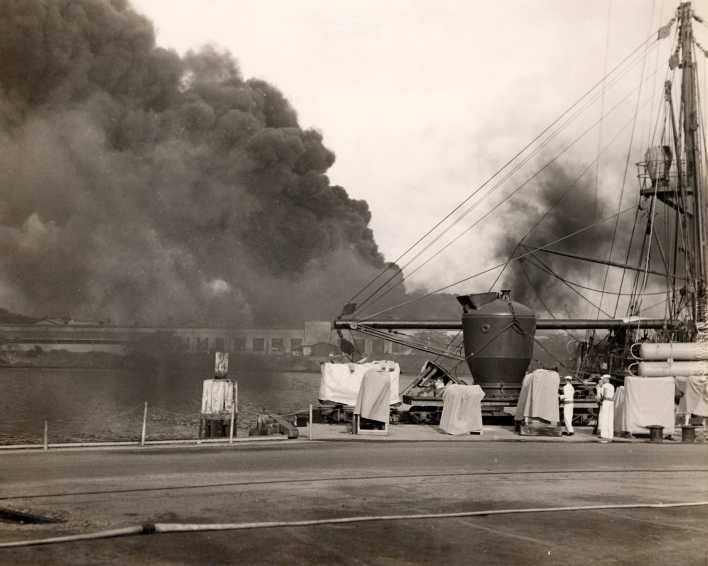
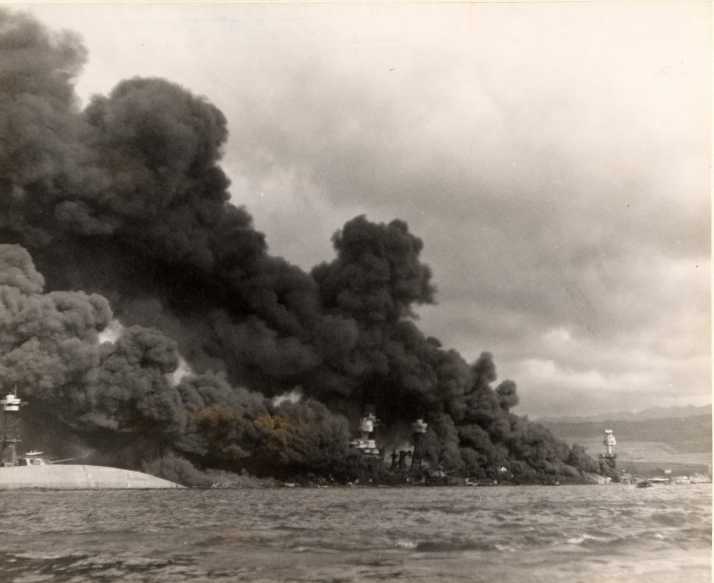
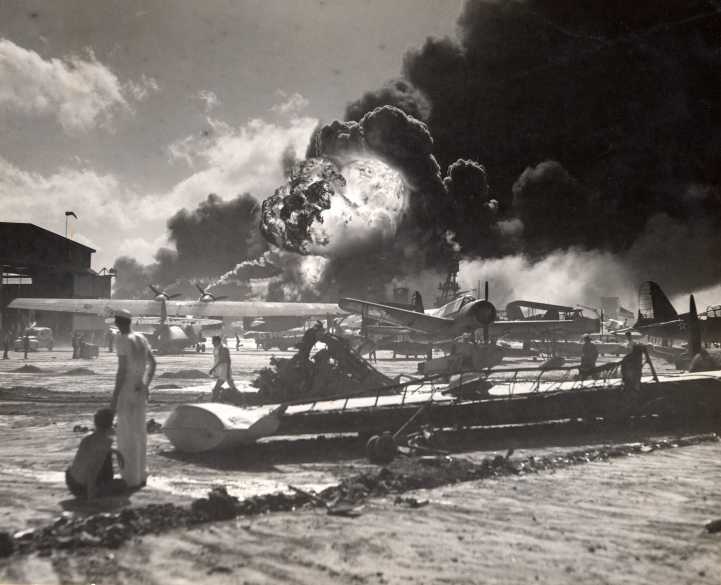
Gordon E. Douglass: Latter-day Saint at Pearl Harbor December 7, 2011 – 70 Years After The Attack on Pearl Harbor By, his Grandson, Roger Gordon Doug


Gordon E. Douglass: Latter-day Saint at Pearl Harbor
December 7, 2011 – 70 Years After The Attack on Pearl Harbor
By, his Grandson, Roger Gordon Douglass


I want to first start off by writing; my grandfather, Gordon Elmer Douglass was a very humble man. He never bragged about his service in the navy. He never bragged about the experiences that allowed him to survive the attack on Pearl Harbor. My grandfather would probably be embarrassed that I’m writing this. I write this to honor him and to honor the sacrifices made by all those who fought tyrany in World War II. I write this to honor the memory of those who died at Pearl Harbor and the 429 shipmates of my Grandfather who went down with the “Okie”. Roger Douglass, December 7, 2011.

Gordon Elmer Douglass was born September 30, 1918 in the small mining town of Eureka, Utah. His father was Samuel Douglass and mother was Pearl McClellan Douglass. Grandpa Douglass was very generous to me. About a year before he died he helped me pay off a large debt that I owed. I could never repay him but I named my first born boy, Gordon Roger Williams Douglass, after him. Grandpa Douglass was from a generation that has been named The Greatest Generation because of the sacrafices their generation made to the United States of America to make it a better place. This was a generation that suffered through The Great Depression and World War II.


December 12, 1940, my Grandfather was commissioned Ensign in the United States Navy and was assigned to the USS Oklahoma which had been based at Pearl Harbor six days earlier. The USS Oklahoma was a World War I era ship that had been commissioned May 2, 1916. She was modernized between 1927 and 1929 and was made famous in 1936 for rescuing U.S. citizens from the Spanish Civil War in 1936.

Pearl Harbor as Remembered by Gordon Elmer Douglass (1918 - 2006)
“I’ve always had a good memory for people, and at a church fireside I saw a fellow who looked like Keith Taylor. I looked at his right hand and he was missing his thumb, so then I knew it was Keith. He didn’t recognize me until I introduced myself to him. I said that he hadn’t seen me since I was 13 in 1932, because that is when I moved to Salt Lake. He said, “You haven’t seen me since I was 8, because that is when I moved away.” He seemed quite excited about meeting someone from home and he gave me his card. He said that he now had a large room with two beds, and if I ever needed to stay in town overnight, to call him on the phone.

On December 6, I had the coding room watch from noon until 4:00 PM. I thought that if the boat to shore was late that I might still have time (to go see Keith.) I ran to my room and changed clothing, but by the time I got to the gangway, the boat was on its way to the officers landing. We were never allowed to call a boat back, so I just went back to my room, and felt sorry for myself. I had notified the duty officer and the wardroom that I was going ashore. Now I notified the steward that I would be aboard for dinner. As I walked into the wardroom, Ensign Stern was playing the record Perfidia on the Victorola. He asked me if I was going to stay aboard ship. I replied that I was, and he asked me if I would stand by for him so that he could go ashore. I agreed, so he called his duty officer, who declined his request because I was not a qualified engineering officer.

I lay down on my bed to rest before changing back to my uniform. I was just settled down and almost asleep, when the Officer on Deck announced that in 10 minutes an extra boat would be leaving the USS Maryland, which was tied to the Okie’s starboard side. I jumped up to go ashore. Then I thought, no I’ll just stay aboard now. I became restless though. Whispers came to me saying, “Gordon, you don’t get enough exercise. Go ashore, go out on a date, have some fun.” I said, “Okay, okay.” I jumped up and went to my wall safe. I don’t know why, but I removed all my money from my safe ($280.00). I put $30.00 back, which was enough to pay my mess bill. This was an odd thing for me to do, because I never carried more than $28.00 with me. I packed a bag with shoes, socks, trousers and shirt. I took the extra bag of clothes so that I could go on a hike if I wanted. Then I ran topside and arrived just in time to board the extra liberty boat.

As soon as I got to town I went to the mission home, changed into the clothing that I had in the bag, and called up to ask Roseanne to come on a hike with me. She countered by inviting me to dinner first. By the time we had finished dinner, we decided, instead, to go to a move. The movie theater was not far from her house, so we walked to the movie. We passed the Waikiki Ward and the LDS Mission Home on the way. As we got in front of the Mission Home, she asked me if I were going to church in the morning. I said “Yes,” and I immediately thought of the invitation that Keith Taylor had given me. I asked her to excuse me for a minute. I went into the mission home and phoned Keith. The phone rang several times and I was just about to hang up and he answered. He hesitated when I asked him if I could stay with him, but he finally said, “Okay.”

The reason Keith had hesitated having me come was because he had lost his big room and was now in a small room with just one single bed. He also told me that before I phoned, he was on his way to town and had forgotten something. He came back just as the phone was ringing.
Keith and I rose early on December 7, 1941. He taught a Sunday School class at a small branch of the LDS Church, which overlooked a small part of the entrance to Pearl Harbor. His class ended at 8:00 AM.

When we came out of the building, we could hear explosions from far away. There were puffs of smoke in the air. Someone asked me what was going on. I replied that it must be army maneuvers of some sort, because the navy didn’t have anything scheduled for today. How dumb could I be? I had been so critical of our captain for not being vigilant, and now I was as bad as he. Army trucks and men were traveling in long lines on the road. An army guard kept our car from the highway until all of the army convoy had passed by. We were in President Jensen’s car and his radio was on, but all that we could hear was static, so he turned the radio off.

When we arrived at the mission home, Keith went into the kitchen where the elders were talking and I went to the bedroom and changed into my suit. One of the elders came in where I was changing clothes and said, “Do you know that we are at war?” This elder was quite a gullible fellow who was the recipient of many pranks, and I assumed that Keith was pulling his leg. I said, “Yea.” He said, “Well, what are you going to do?” I said, I’m going to put my suit on and go to church.” I then said that Keith was just kidding him. He then said, “Well Keith may be kidding, but the radio announcers are not.”

In the kitchen the elders were huddled around the radio and the announcer kept saying, “The Japanese have attacked Pearl Harbor. All service men report to your units and all civilians stay off of the streets.” I threw my tie over my head, slipped on my shoes without tying them and ran out into the middle of the street. I commandeered the first car to come my way. It was a taxi and six other servicemen were in it. These town taxis were not allowed on the base, so he dropped us off at the Alexander Young Hotel, without collecting our fares, and proceeded out to find more service men. The next taxi took us to the naval base.

The guard didn’t allow the taxi on the base. We had to get out of the taxi, identify ourselves at the gate and walk to our various locations on the Naval Base. It took a long time to get through he gate because our ID’s were checked more closely than they ever had been before. There were thirty or forty officers and men waiting to get into the base. There was a big long sheet of very black smoke out in the bay. As I ran to the officers boat landing I heard one sailor holler to another that the black smoke was coming from the Arizona, and that the Oklahoma was sunk. My heart sank with the ship. I was supposed to be on the ship with the 81 men in my division.

When I arrived at the Officer’s Club Landing, I looked over to where the Okie was berthed, and I saw a mast through the smoke. The Okie isn’t sunk after all! A motor launch came to the landing and the Coxswain announced that he would take all officers to their ships, so I boarded the launch. One of the officers was rip-roaring drunk. He kept saying or rather crying or sobbing, over and over again, “Why the dirty rotten little yellow sons of B’s!” We went to the right and passed the ship of the drunken officer. The ship’s Officer of the Deck refused to allow him to come aboard. He said that they had enough to cope with without having a hopeless drunk on their hands. So we had to endure the endless cries of the drunken officer.

In the moments of stress, I had forgotten that the Okie was tied up to the USS Maryland. It was the mast of the Maryland which I had seen through the smoke. We passed by the Okie and indeed it was bottom up. As we passed by, in my mind’s eye, I could see the 81 men in the “C Division,” down in the depths of the sea, struggling for air and floundering in the dead air spaces. I didn’t know until later that there were no dead air spaces. Our super efficient new captain had left all the compartments open so that we would be ready for a possible inspection on Monday, December 8, 1941. Because of the compartments being open, the ship was sunk in 11 minutes.
A group of low-flying torpedo planes dropped three torpedoes into the port side of the Okie. One of these torpedoes went into the radio shack (my battle station) and exploded. A fourth torpedo followed in the wake of that one and exploded right in the radio shack. I reflected upon the events of December 6, 1941. If I hadn’t met Keith Taylor at the fireside, if I hadn’t listened to the promptings telling me to go ashore, if Ensign Stern’s duty officer had approved me to stand by for him, if Roseanne hadn’t asked me if I were going to church just as we passed the mission home, if Keith hadn’t forgotten something so that he had to return to where his phone was, if he had told me that he didn’t really have room for me now that he had lost his second bed, then I would have been aboard ship and would have gone to my battle station where two torpedoes exploded.

We lost all of our battleships in one fell swoop. Fortunately for us none of our aircraft carriers were in port. The carriers were scheduled to be in port, but for various reasons were not there. Our loss of manpower was very severe. The war was to be waged with aircraft and submarines. These old captains and admirals were forced into accepting air warfare, because their old battleships were now gone. These old battleships were restored and used later in the war to shell some of the Japanese islands. The number two, 2-gun turret was taken from the USS Oklahoma and installed on the USS Nevada. The number two, 2-gun turret was taken from the USS Arizona and also installed on the USS Nevada. These guns were fired by the USS Nevada against Iwo Jima and other islands. So the entire battleship force, which was destroyed at Pearl Harbor, managed to participate in some manner in the war against Japan.

My Grandfather, Gordon Elmer Douglass’ story was originally published December 5, 2006 in the Red Rock Reporter (Kanab, Utah). The article was written by my uncle Kent D. Douglass. I have borrowed heavily from my uncle’s story. Being that December 7, 2011 is the 70th anniversary of the attack on Pearl Harbor, I wanted to remember not just my grandfather, but all those who have served this greatest nation on earth in all wars from The Revolutionary War to Afghanistan. It is my prayer that God keep us free from tyranny and oppression and that great men rise up once again to make sacrifices that will benefit not just the United States, but all people of Earth.

Going To Church Could Save Your Life One Day

USS Oklahoma on Fire

Note: This is a letter home from my Grandfather, to his mother. His ship was the U.S.S. Oklahoma. His ship was hit by five Imperial Japanese Navy torpedoes. Twelve minutes after she was hit, she was entirely capsized. 429 of her crew were killed or missing.

December 21, 1941

Dear Mother,

It looks like I made out my allotment for too much money. Will you send me a money order for about $50 or $80? Do not put my rank on the money order -- just my name. Also just put my name on the letters you write. Address your letters just like I have the return address written on.

I haven’t heard from you or Jean for about five weeks now. Have you been writing? How was Christmas and New Years? It looks like I’ll be working both days.

December 6th I stayed overnight with Keith Taylor and went to church the next morning -- so I wasn’t even at Pearl Harbor during the attack.

I tried to find Gerald Stehli, but couldn’t. I’ll have to find out what whip he’s on, or I won’t be able to find him.

Love,
Gordon

P.S. What are Jean and Evan going to do now?